
Quarantining Freshwater Fish: The Full Guide
Do you quarantine every new fish?
How long do you quarantine?
What’s your process?
Have you ever added “healthy” fish… then everything started going downhill a week later?
Even healthy fish can become sick fast if they’re added to the wrong environment—especially after shipping stress.
If you’ve been in the fishkeeping hobby long enough, you’ve likely experienced—or at least heard about—the sudden tank crash that happens shortly after adding new fish. Everything seems fine at first. Then fish begin flashing, hiding, developing spots, or declining rapidly.
In many cases, quarantine could have prevented it.
What is quarantining and why is it important?
Quarantining is the practice of placing newly acquired fish into a separate tank for a set period before introducing them into your main display aquarium.
This isolation period allows you to:
Observe for signs of illness
Allow fish to recover from shipping stress
Treat parasites or bacterial infections if needed
Protect your established tank from contamination
Fish can carry parasites or bacteria without showing visible symptoms. Stress from transport, handling, and parameter changes weakens their immune systems. When immunity drops, hidden pathogens can multiply quickly.
Quarantinining your fish gives you a controlled environment to monitor and intervene before problems spread.
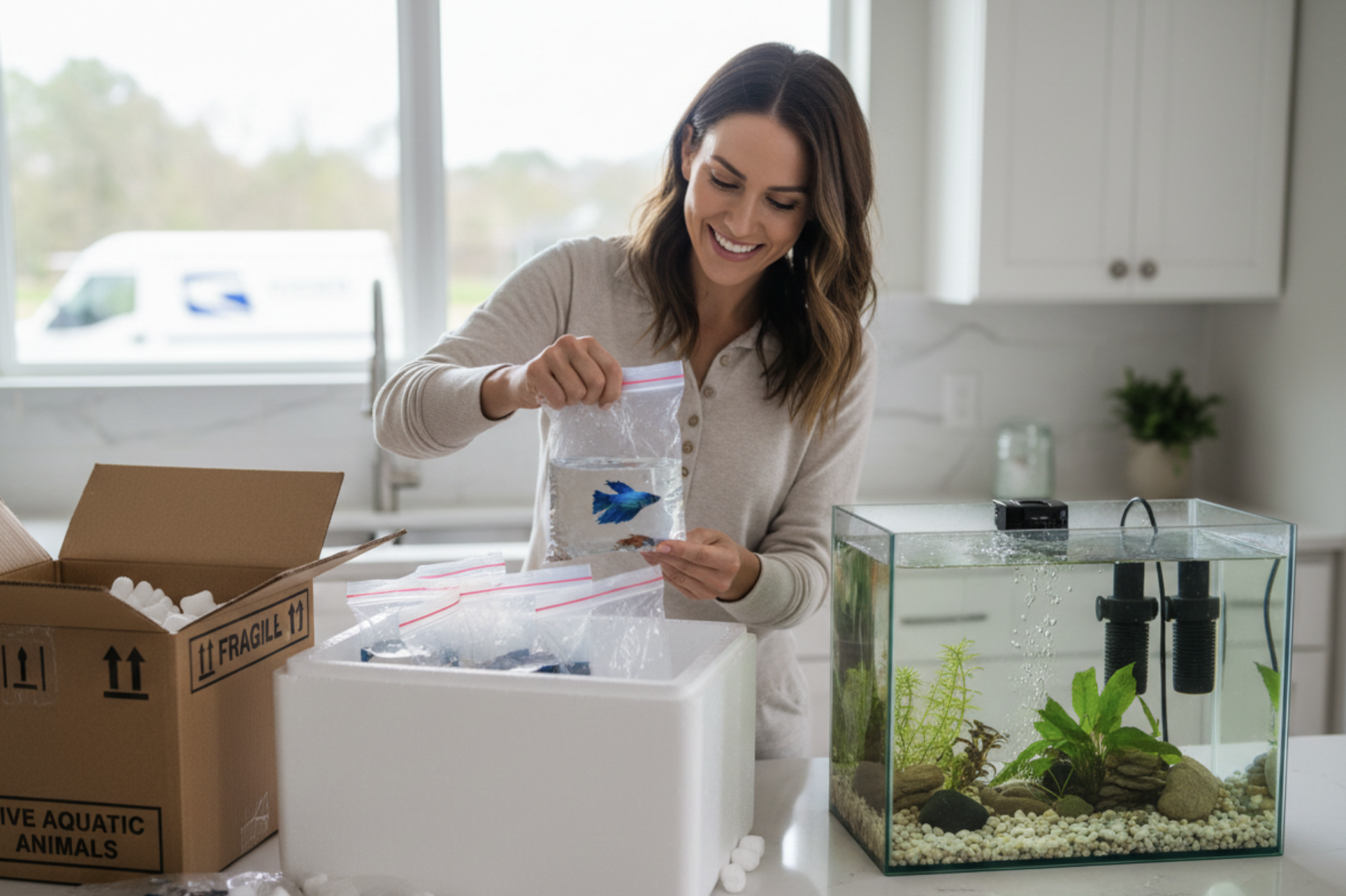
Quarantine protects BOTH your new fish and your established tank
Most hobbyists view quarantine as protection for their existing fish. But it works both ways.
Healthy fish + contaminated tank = fast decline.
You can receive healthy fish and place them into a tank that already contains low-level pathogens. Your established fish may tolerate those pathogens because their immune systems are strong. Newly shipped fish, however, are stressed and weakened.
Shipping stress lowers immunity. When immunity drops, bacteria and parasites can take hold.
Quarantine protects:
Your established fish from outside pathogens
Your new fish from what may already exist in your aquarium
It’s not just about keeping bad things out. It’s about stabilizing new arrivals before exposure.
Why some fish are higher-risk
Not all fish travel the same path before reaching your tank.
Imported and trans-shipped fish
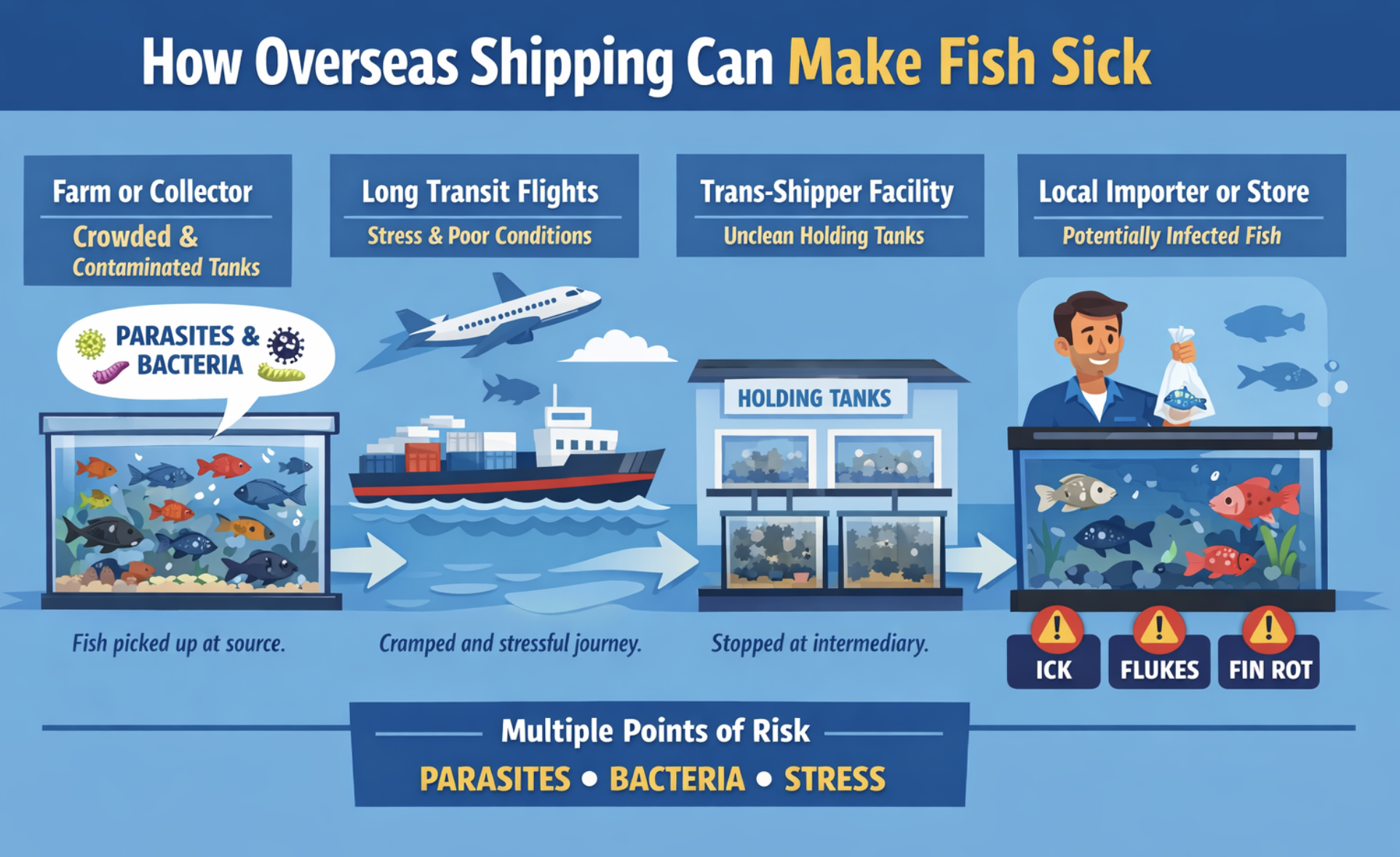
Fish that are imported or trans-shipped often move through multiple systems and holding facilities. Along the way, they may be exposed to parasites, bacteria, and varying water conditions.
Even reputable sellers cannot control every step before fish arrive to them. The more systems fish pass through, the more opportunities there are for contamination.
The Purple Aquatics difference
At Purple Aquatics, we breed our own fish rather than relying on overseas trans-shippers. That reduces certain risks associated with long supply chains.
However, we still recommend quarantine anytime new fish enter your system. Whether fish come from a breeder, a local fish store, or an online supplier, quarantine remains best practice.
Quarantine setup recommendations
A quarantine tank does not need to be complicated. It needs to be separate and easy to control.
Basic quarantine tank setup
A simple setup may include:
A standalone tank (10–20 gallons for most small freshwater species)
Sponge filter or simple filtration
Bare bottom for easy cleaning
Simple hiding places such as PVC pieces
The goal is visibility and control. A bare-bottom tank makes it easier to monitor waste, observe behavior, and clean quickly if treatment is required.
Use separate equipment
Do not share nets, siphons, buckets, or towels between your quarantine and display tanks.
Cross-contamination defeats the purpose of quarantining. Dedicated equipment helps maintain a true separation between systems.
How long should you quarantine?
Minimum: 2 weeks
Preferably: 1 month
Best Practice: Up to 2 months
Some illnesses can remain hidden longer. There have been cases where fish showed no visible symptoms during a month-long quarantine, only to later reveal internal parasites close to the two-month mark.
Two weeks catches the obvious. A month catches most of the sneaky stuff.
The longer you quarantine, the more confidence you gain that your fish are stable, eating well, and symptom-free before entering your display tank.
What to watch for (common illnesses)
Observation is the most important part of quarantine. Watch for changes in behavior, appetite, and appearance.
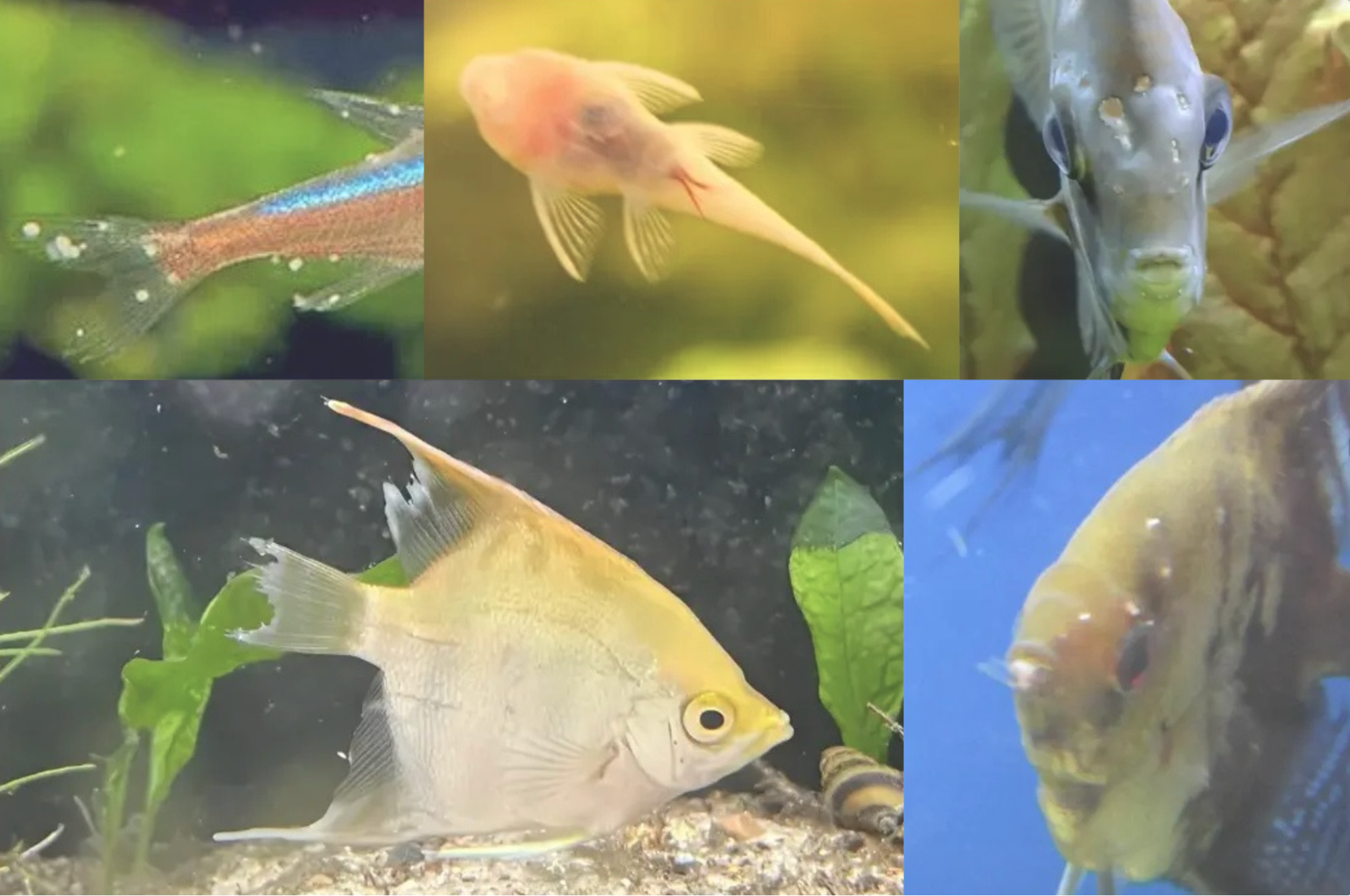
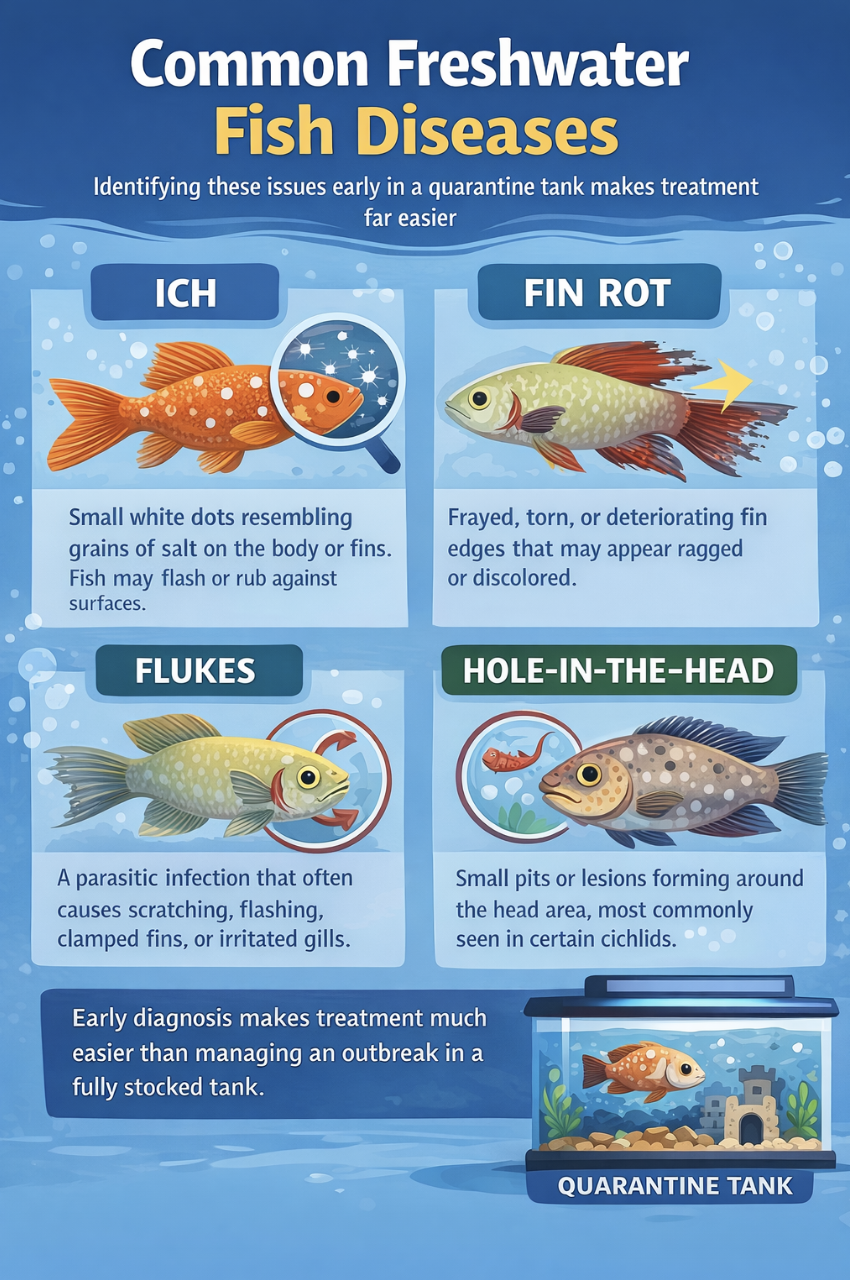
Small white dots resembling grains of salt on the body or fins. Fish may flash or rub against surfaces.
Frayed, torn, or deteriorating fin edges that may appear ragged or discolored.
A parasitic infection that often causes scratching, flashing, clamped fins, or irritated gills.
Small pits or lesions forming around the head area, most commonly seen in certain cichlids.
Identifying these issues early in a quarantine tank makes treatment far easier than managing an outbreak in a fully stocked display aquarium.
Nematodes (Internal Worms)
Nematodes are internal parasitic worms that can infect freshwater fish. Some are difficult to detect early because they live inside the fish rather than on the skin or fins.
Symptoms may include:
Weight loss despite eating
Stringy white feces
Lethargy
Swollen abdomen
Visible red worms protruding from the vent (in certain species)
Common types of nematodes affecting fish
Nematodes vary greatly in their life cycles and where they live inside the host. Some of the more common types include:
Camallanus
These are among the most recognizable nematodes. They appear as red, thread-like worms protruding from the anus of infected fish. Camallanus worms can spread in aquariums if not treated promptly.
Eustrongylides
Large nematodes that may encyst in the muscles or internal organs of fish. They can cause significant internal damage depending on the level of infestation.
Contracaecum
More common in marine environments, fish often act as intermediate hosts. Larval stages may encyst in organs, causing internal lesions.
Capillaria (Family: Capillariidae)
These nematodes infect the intestinal tract and can lead to inflammation, poor nutrient absorption, weight loss, and chronic decline.
Recommended quarantine medications
Many hobbyists choose to use preventative or early-intervention treatments during quarantine.
Common quarantine medications hobbyists use include:
API General Cure - For Hole in the head and Flukes
Fritz ParaCleanse - For Hole in the Head
API Erythromycin - For Fin Rot
Ick X - For Ich
Fenbendazole or Levamisole - For Camalanus Worm
Each product has its own instructions and dosing guidelines.
Always follow the manufacturer’s instructions and dose based on your tank volume. Never estimate water volume, and do not combine medications unless explicitly directed on the label.
When official product links are provided, those should be referenced for full usage directions.
The most common reason people regret skipping quarantine
A common story sounds like this:
“My fish started dying after a week.”
One of the first questions to ask is simple: Did you quarantine?
Adding fish directly into your display tank exposes every inhabitant immediately. Once symptoms appear, the entire system has already been compromised.
Quarantine may feel like an extra step, but compared to the cost of medication, fish loss, and tank instability, it is a small investment of time and space.
Conclusion
Quarantining freshwater fish is not about assuming the worst. It is about preventing it.
It allows new fish to recover from shipping stress.
It protects established fish from outside pathogens.
It provides a controlled space to observe and treat early issues.
Minimum two weeks. Preferably one month. Longer if you want added peace of mind.
Two weeks catches the obvious. A month catches most of the sneaky stuff.
If you want to protect your investment, your time, and the health of your aquarium, quarantine should be part of your standard fishkeeping routine.
Frequently Asked Questions About Quarantining Your Fish
-
A minimum of two weeks is recommended, but one month is preferred. Some illnesses may take longer to present symptoms.
-
Yes. A quarantine tank must be separate from your display tank to prevent cross-contamination and allow proper observation and treatment.
-
No. Fish can carry parasites or bacteria without visible symptoms, especially after shipping stress.
-
Some hobbyists use preventative treatments, while others observe first and treat only if symptoms appear. In all cases, follow manufacturer instructions carefully.
-
For most small freshwater fish, a 10–20 gallon tank works well. Larger species may require more space.
-
It is not recommended. Dedicated nets and tools help prevent cross-contamination.
-
Ich, fin rot, flukes, and hole-in-the-head are among the most commonly reported illnesses following the introduction of new fish without quarantine.