
Ich in Freshwater Fish: Identify, Treat & Prevent White Spot Disease
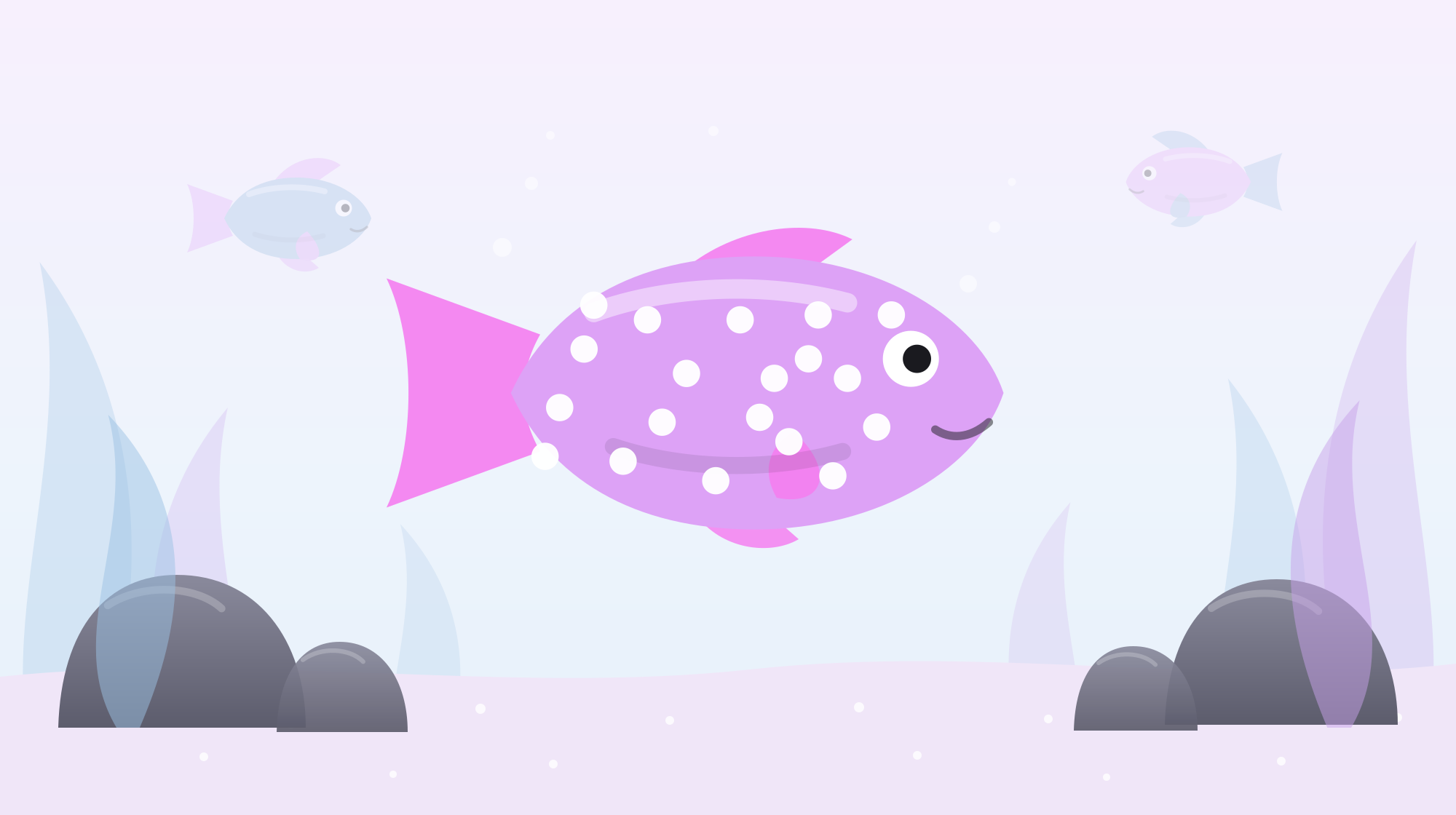
Ich is the disease most freshwater fishkeepers encounter first, and it is also the one most frequently misidentified. The classic presentation is unmistakable once you have seen it — a scattering of white specks that look like someone shook table salt across the fish — but by the time those spots are visible, the infection is already well established, and several unrelated conditions produce spots close enough to fool an experienced eye.
Ich in freshwater fish is caused by Ichthyophthirius multifiliis, a large ciliated protozoan parasite found in cultured and wild fish worldwide. UF/IFAS Extension classifies an active outbreak as a true emergency: left untreated, it can produce 100% mortality. It is also highly treatable, because only one of the parasite's three life stages can be reached by anything you put in the water.
This guide covers what the parasite actually is, how to confirm you are dealing with it and not a lookalike, how to treat it without harming your fish, plants, or invertebrates in the process, and how to keep it out of your system in the first place.
What ich is and why it spreads so quickly
Ichthyophthirius multifiliis is an obligate parasite, meaning it cannot survive or reproduce without a living fish host. Every species of freshwater fish is considered susceptible. The parasite has a direct life cycle — it needs no intermediate host, no snail, no bird — which is why it moves from one fish to the next with nothing to slow it down.
What makes ich so dangerous is its reproductive arithmetic. Most protozoan parasites reproduce by simple division: one organism splits into two. A single ich organism instead encysts and divides repeatedly inside a protective wall — UF/IFAS describes the tomont dividing up to ten times to produce as many as 1,024 daughter parasites in a single generation. Measured yields in the lab run lower and vary by strain: one Australian isolate averaged 267 infective cells per cyst at 5°C, peaked at 493 at 25°C, then fell back to 288 at 30°C. Two or three visible spots today is a genuinely different problem from two or three visible spots after another cycle completes.
Outbreaks frequently follow a change in water temperature, particularly a rise, and they are far more severe in crowded systems where free-swimming parasites have an easy time finding a host. That combination — a temperature swing plus a full tank — describes exactly what happens when new fish are added to an established aquarium without quarantine.
The myth that ich is always present in every tank
A persistent piece of hobby folklore holds that ich is present in every aquarium at all times and only needs stress to “activate.” This is not supported by the biology. Ich is an obligate parasite with no true dormant resting stage: in a tank with no fish, the free-swimming infective stage typically has only about 24 to 48 hours at tropical temperatures to find a host before it dies. Cysts already sitting on the substrate keep releasing fresh waves for a while — days in warm water, weeks in cold — so a tank does not go safe overnight. But it does not hold a latent reservoir of ich indefinitely either.
Experienced keepers do occasionally report outbreaks in tanks with no recent additions, and those reports deserve a fair hearing rather than dismissal. In most documented cases the route of introduction turns out to be something other than a new fish — a shared net or siphon, bag water from a store, plants or decor moved from another system, or a previously exposed survivor carrying a low-level infection that its immune system had been holding in check. The practical takeaway is the same either way: ich comes from somewhere, and that somewhere is almost always traceable.
The ich life cycle and why it determines your treatment plan
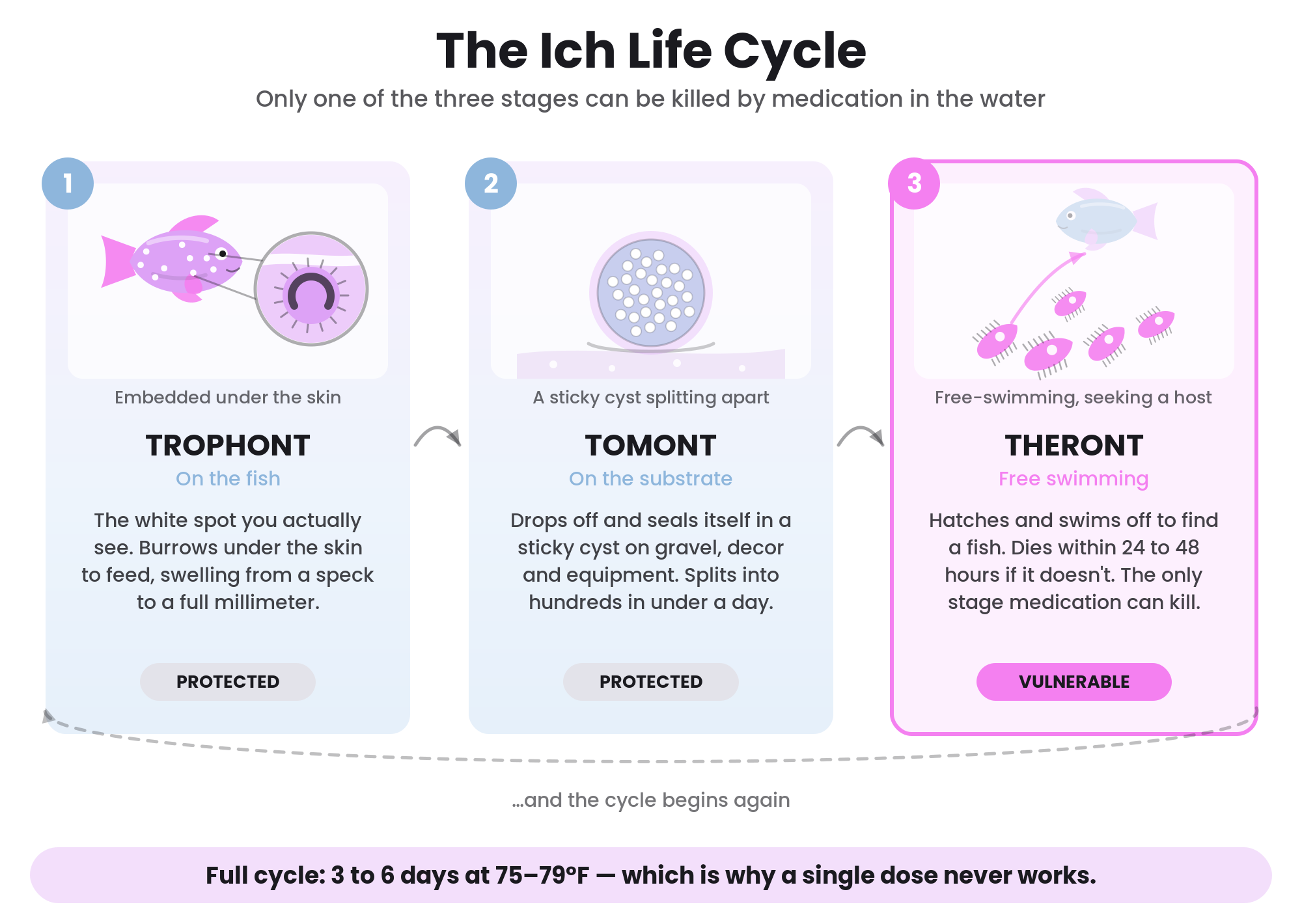
Almost every failed ich treatment can be traced back to a misunderstanding of this life cycle. The parasite spends most of its existence in one of two chemically protected states, and only briefly passes through a vulnerable one. Treatment is not about killing the spots you can see; it is about being present in the water every time a new batch of infective cells hatches.
Trophont: the feeding stage on the fish
The trophont is the white spot. It burrows between the thin outer layers of the fish's skin or gill tissue, where it feeds on the host and grows dramatically — from a theront barely 40 to 60 micrometers long to a mature trophont of 500 to 1,000 micrometers, up to a full millimeter. That surrounding layer of host epithelium and mucus is what makes the trophont effectively untouchable: medication in the water cannot reach it. Trophonts stay on the fish for several days in cool water and considerably less at tropical temperatures — the complete cycle runs three to six days at 75 to 79°F.
Under a compound microscope at 40x, a mature trophont is dark, oval to round, densely ciliated, and moves in a slow rolling, amoeboid fashion. Its horseshoe- or C-shaped macronucleus is the most useful confirming feature — though UF/IFAS cautions that it is often not visible in less mature trophonts, so its absence does not rule ich out.
Tomont: the reproducing stage in your tank
When the trophont is mature it stops feeding and drops off the fish. It then secretes a gelatinous cyst wall that makes it sticky, allowing it to adhere to substrate, decor, plants, filter media, tubing, and any equipment that touches the water. Inside that cyst it divides up to ten times, producing hundreds and sometimes more than a thousand daughter cells — a process that can complete in 18 to 24 hours at around 74°F.
The gelatinous wall protects the tomont from chemicals just as effectively as host tissue protects the trophont. This is why cleaning matters as much as dosing: tomont cysts attach readily to organic debris, so vacuuming the substrate physically removes parasites that no medication can reach.
Theront: the free-swimming infective stage
The theront is the only vulnerable stage in the entire cycle. Smaller than the trophont, pear- or spindle-shaped, translucent, and fast-moving — it spins continuously along its long axis as it searches for a host. Once it burrows into a fish, it is protected again within minutes.
This is the single most important practical fact about treating ich in freshwater fish: a single dose of any medication will only kill theronts that happen to be swimming at that moment. It does nothing to trophonts already on your fish, nothing to cysts on your substrate, and nothing to theronts that hatch after the chemical has broken down. Only repeated, correctly timed doses break the cycle.
Why water temperature changes everything
Temperature controls the speed of the entire cycle. At 75 to 79°F, the complete cycle finishes in roughly three to six days, and UF/IFAS recommends daily chemical treatment with a minimum of three to five applications. At 60°F, the cycle stretches out and treatments should instead be spaced three to five days apart, with a minimum of five applications. Laboratory work on one isolate measured cyst development time at a mean of 189 hours at 5°C, falling to just 11.7 hours at 30°C.
What warmer water changes is speed, not volume. The same study found theront output per cyst peaking near 25°C and then declining at 30°C, and a separate Nordic strain peaked lower still, somewhere between 12 and 21°C. Heat does not hand the parasite more offspring in the aquarium range — it compresses the timeline, which cuts both ways: the vulnerable free-swimming stage arrives sooner, but so does the next wave of infection. Your dosing interval has to match the tank temperature, not a generic schedule printed on a bottle.
Symptoms of ich in freshwater fish
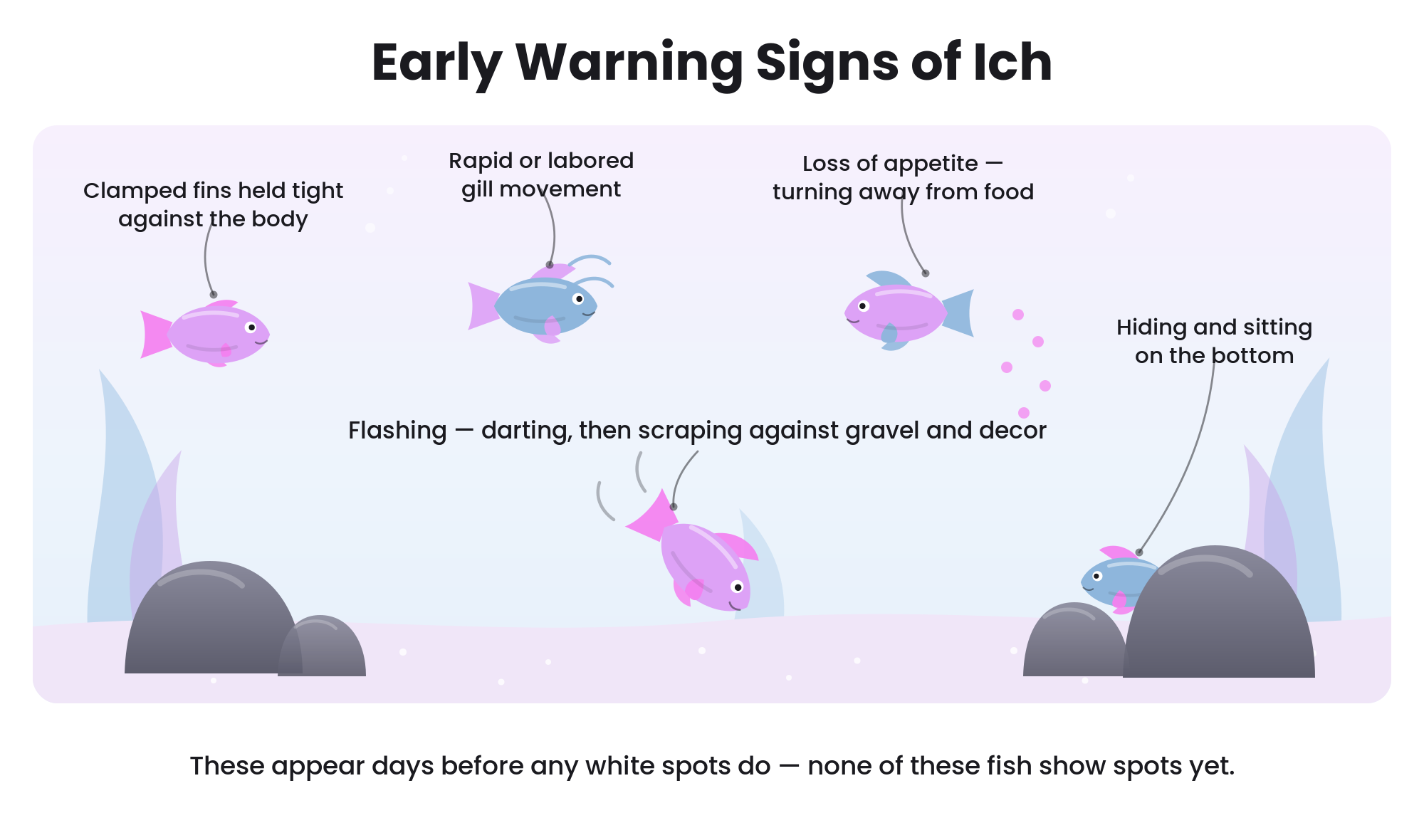
Behavioral changes almost always precede visible spots. Fish that are being invaded by theronts are physically irritated well before the parasites grow large enough to see, and a keeper who watches feeding time closely will catch an outbreak days earlier than one who waits for the salt-grain appearance.
Early signs to watch for:
Flashing — sudden darting followed by scraping the body against substrate, rocks, or decor
Clamped fins held tight against the body rather than fanned out
Loss of appetite, or approaching food and then refusing it
Lethargy, hanging near the surface, or resting in the filter outflow
Rapid, labored, or one-sided gill movement
Hiding or sitting on the bottom in a fish that normally swims openly
The visible spots themselves are discrete, well-defined, and very white, roughly the size of a grain of salt and no larger than about one millimeter. They are distributed uniformly across the body and fins rather than appearing in patches, and they protrude only slightly from the surface. On pale or white fish they can be genuinely difficult to see. By the time you can count spots from across the room, the fish is already seriously ill — UF/IFAS is explicit that visible white spots indicate an advanced infection, not an early one.
Gill-only ich: the outbreak with no white spots
Ich can establish itself almost entirely in the gills, and in those cases fish may die in large numbers with no external spots at all. Affected gills are typically pale and visibly swollen, and the fish shows respiratory distress — gasping at the surface, flared opercula, rapid ventilation — without the visual cue most keepers are waiting for.
If you are losing fish that show heavy breathing and flashing but no spots, do not rule out ich on appearance alone. Gill and skin biopsies examined under a microscope are the only way to be certain, and a single confirmed parasite is enough to justify immediate treatment.
Is it really ich? Ruling out the lookalikes
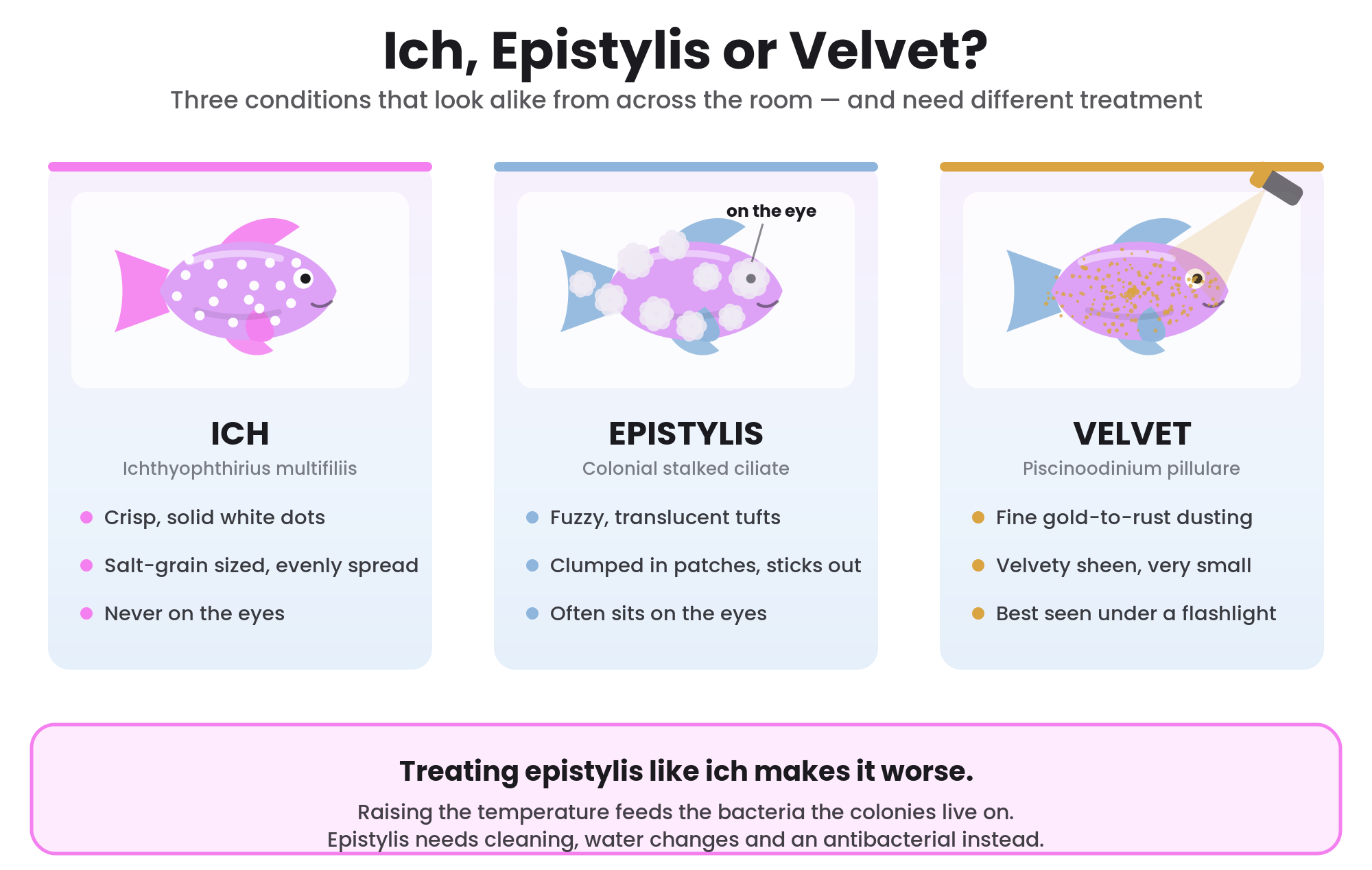
White spots should never be the sole basis for a diagnosis. Several conditions produce white or pale markings on fish, and at least two of them — epistylis and columnaris — get measurably worse when you raise the temperature the way a standard ich protocol tells you to. Confirmation requires a microscope: a coverslip scraped gently from head to tail, or a small fin or gill clip, mounted in tank water and examined at 40x for the rolling motion and horseshoe macronucleus. Most hobbyists will not do that, which makes visual differential diagnosis a skill worth developing.
Epistylis
Epistylis is the lookalike that causes the most damage, because the standard ich treatment actively makes it worse. It is a stalked, colonial ciliate that feeds on bacteria in the water rather than on the fish itself, using the fish only as an anchor point.
Visually, epistylis is fuzzy and translucent rather than crisply white, forms tufts or clumps rather than evenly scattered dots, and protrudes noticeably from the body instead of sitting nearly flush. The most useful single distinguishing feature is location: epistylis frequently colonizes the eyes, and ich only rarely does — and when ich does appear on an eye it shows as a single crisp white dot, not a fuzzy tuft. Epistylis also tends to appear in patches, often anchored to a wound or damaged tissue, whereas ich distributes itself uniformly.
The part of a standard ich protocol that actively backfires is the heat: raising the temperature accelerates growth of the bacteria the colonies feed on. The medication itself is less of a problem — Aquarium Science in fact recommends dosing a formalin and malachite green product when you cannot tell the two apart, precisely because it covers ich if that is what you are looking at. What it will not do is resolve epistylis, which is fundamentally an environmental and bacterial problem: the colonies thrive in water carrying heavy organic load, usually anchored to a wound. The response is aggressive debris removal, larger and more frequent water changes, and an antibacterial such as kanamycin or minocycline delivered in food to treat the underlying infection.
Velvet
Freshwater velvet is caused by Piscinoodinium pillulare, a flagellate rather than a ciliate, and unusually for a parasite it is partly photosynthetic. It presents as dust rather than as grains: an extremely fine yellow-gold to rust-brown coating that gives the fish a dull velvety sheen. Individual organisms are far smaller than ich trophonts and much harder to see.
The reliable way to detect velvet is to darken the room and shine a flashlight beam across the fish at an angle — the coating catches the light with a distinctive metallic gold cast. Velvet is often described in the hobby as reproducing faster than ich, but the measured numbers do not support that: velvet's life cycle runs roughly six to twelve days at typical aquarium temperatures against ich's three to six, and it produces about 256 dinospores per cyst against ich's potential 1,024. What velvet does do is colonize the gills heavily and kill fish that look only lightly dusted, so it deserves at least as much urgency despite the slower cycle. It responds to a somewhat different protocol built around reduced lighting and copper- or malachite green-based treatment. Note that velvet is largely resistant to salt and to formalin on its own, so an ich protocol leaning on those two will not touch it.
Fungus and columnaris
True fungal infection, usually Saprolegnia, produces cottony, filamentous growth with visible fuzz extending outward from the body. It is almost always secondary to an injury or to poor water conditions, and it appears at a specific site rather than scattered across the fish. Columnaris produces grey-white saddle-shaped patches, commonly near the mouth or along the dorsal ridge, that spread as lesions rather than remaining as discrete dots. Neither responds to ich medication, and columnaris is the second condition an ich protocol actively worsens: Flavobacterium columnare becomes markedly more virulent as water warms, so heating a tank you believe has ich can accelerate a columnaris outbreak instead.
Breeding tubercles and other harmless white spots
Male goldfish, koi, and various other cyprinids in breeding condition develop breeding tubercles — small white bumps that appear in neat rows on the gill covers and along the leading rays of the pectoral fins. Other cyprinids carry them elsewhere; male danios, for instance, develop them on the anal fin and body rather than the gill plate. They are seasonal, appear almost exclusively on males, and their orderly arrangement distinguishes them immediately from the random scatter of ich. Lymphocystis, a viral condition, produces larger, slow-growing, cauliflower-textured nodules that are rarely fatal and do not respond to parasite treatment. Neither condition requires or benefits from medication.
How to treat ich step by step
Before choosing a specific chemical, there are principles that apply to every ich protocol regardless of which product you use. Getting these wrong is a more common cause of failure than choosing the wrong medication.
Treat the entire tank, never an individual fish. By the time spots are visible, cysts are already on your substrate and decor.
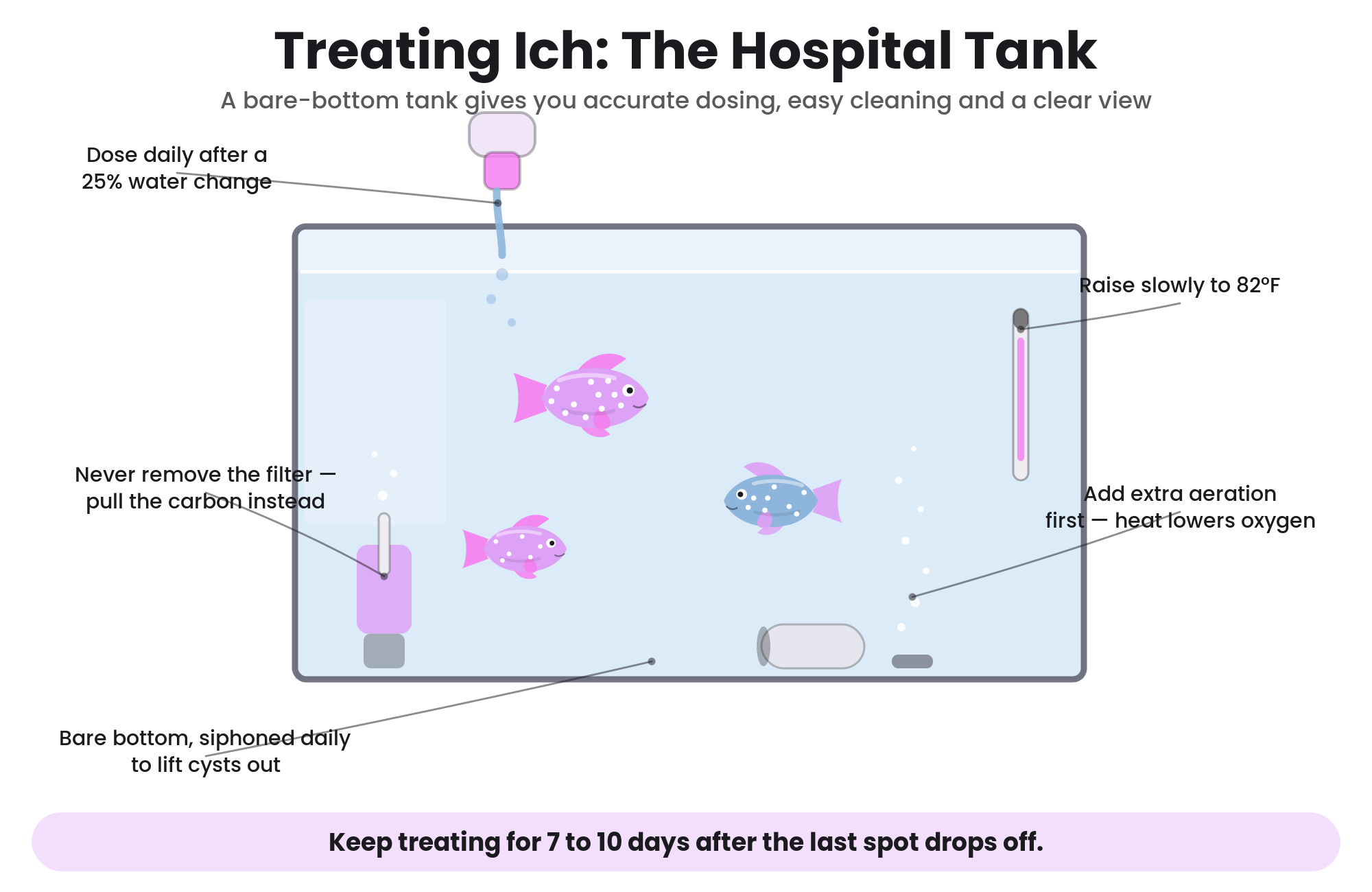
Increase aeration before you do anything else. Add an air stone, lower the water level to increase surface agitation, or point a powerhead at the surface.
Remove activated carbon, Purigen, and any other chemical filtration — with a caveat. The Ich-X label instructs you to remove carbon, and Seachem advises pulling Purigen during any medication because it can strip malachite green out of the water. Aquarium Science takes the opposite position, arguing that carbon left in a tank longer than two weeks is already exhausted and should not be disturbed mid-outbreak. Both sides agree fresh carbon will pull medication out of the water; they disagree about how much adsorptive capacity old carbon still has. Read both positions and decide for your own filter.
Never turn off, remove, or replace your filter or its biological media. Established filters host microfauna that consume free-swimming stages, and disrupting the filter mid-outbreak risks an ammonia spike on already-compromised fish.
Vacuum the substrate and remove organic debris daily. Tomont cysts adhere to debris, so physical removal directly lowers the number of parasites that will hatch.
Remove dead fish immediately. Mature trophonts abandon a dead host quickly and begin reproducing in the environment.
Measure your actual water volume, subtracting substrate and hardscape displacement. A “20 gallon” aquascaped tank often holds closer to 16.
Continue treatment for at least three days after the last visible spot has dropped off — the interval the Ich-X label specifies. Many keepers extend that to a full additional life cycle, roughly a week at tropical temperatures, as insurance; there is no published figure behind any specific longer number, so treat the extra days as caution rather than protocol.
Formalin and malachite green medications
Combination formalin and malachite green products are the most consistently effective option available to hobbyists and are what public aquariums and university research facilities generally use. Common products include Ich-X, Rid-Ich Plus, and QuickCure. Ich-X is dosed at one teaspoon, roughly 5 mL, per 10 gallons, which produces approximately 0.05 mg/L of malachite green and 15 mg/L of formalin in the tank. Dose once every 24 hours, performing a 25% water change immediately before each redose so the chemical does not accumulate. Formalin used on its own is typically applied at 25 mg/L, equivalent to 1 mL per 10 gallons, with a half dose of 12.5 mg/L available for sensitive species.
Three cautions. Formalin consumes dissolved oxygen as it breaks down — roughly 1 mg/L of oxygen for every 5 mg/L of formalin — which makes vigorous aeration mandatory rather than optional. Malachite green will permanently tint silicone seals, airline tubing, and porous decor a blue-green shade. And the two most authoritative sources flatly disagree about combining these products with salt. UF/IFAS recommends adding salt alongside formalin to enhance the response, with decades of aquaculture practice behind that position. The Ich-X label states plainly that the product should not be used with any other treatment, salt included — and the manufacturer is the party that formulated and tested it. Both positions are defensible and we are not going to pick one for you. If you combine them, keep the salt concentration low and watch the fish closely; if you would rather not, dose the medication alone, which is effective on its own.
Salt
Theronts are intolerant of elevated salinity in the range of 3 to 5 parts per thousand. UF/IFAS describes a prolonged bath of 4 to 5 g/L (4 to 5 ppt) held for seven to ten days at 75 to 79°F as an effective treatment in smaller systems, provided the species involved can handle it. Salt also reduces the osmoregulatory stress caused by the parasite's feeding damage to skin and gills, which is why it is commonly used alongside formalin rather than instead of it.
For practical dosing, roughly one tablespoon of aquarium salt per five gallons yields about 1 ppt, so the 4 to 5 ppt UF/IFAS therapeutic range works out to four or five tablespoons per five gallons — about one tablespoon per gallon, which corresponds to Aquarium Co-Op's highest concentration, their “Level 3.” Here the sources diverge, and it is worth knowing why. Aquarium Co-Op's own recommendation specifically for ich is lower: one tablespoon per two gallons, roughly 2.2 ppt, held for ten days, escalating only if symptoms worsen. UF/IFAS is writing for aquaculture, where the priority is killing the parasite outright and the stock is generally salt-hardy; Aquarium Co-Op is writing for mixed community tanks and starts low to protect sensitive species. Anything below about 3 ppt sits under the level UF/IFAS says theronts cannot tolerate, so it is doing more to ease osmotic stress than to kill parasites. Read both and decide what your particular fish can take. Dissolve the salt in a cup of tank water before adding it, and never pour granules directly onto substrate or fish. Salt does not evaporate or break down — replace it only in proportion to the water you physically remove.
Use aquarium salt or plain non-iodized sodium chloride with no anticaking agents. Most freshwater fish tolerate 5 ppt for several weeks and many tolerate 3 ppt indefinitely, but tolerances are species-specific and worth checking before you commit.
Heat, and the honest disagreement about it
Raising the temperature to 82 to 86°F is the most widely repeated hobbyist protocol, usually paired with salt. The stated mechanism is that heat accelerates the life cycle so trophonts drop off and theronts hatch sooner, shortening the window in which your medication, your salt, and the fish's own immune response have to do their work.
One camp, drawing on older aquaculture literature and repeated widely in the hobby since, holds that the parasite stops reproducing near 86°F and dies at sustained temperatures around 89.5 to 90°F held continuously for several days. Two things are worth noting about that position. The specific temperature figures circulate without a consistently traceable primary citation, and UF/IFAS does not make the claim at all — its Ich fact sheet treats temperature purely as the variable controlling life cycle speed and treatment timing, and never recommends heat as a therapy. Laboratory isolates have also been cultured successfully at 30°C, which is 86°F, which is hard to square with reproduction stopping there. Aquarium Science argues the stronger version of the same objection: that heat neither kills the organism nor halts reproduction, and that apparent “cures” simply reflect a shortened life cycle in a filtered tank that would have cleared on its own.
Both sides agree on the parts that matter operationally. Heat is not a substitute for salt or medication. Raising the temperature increases the fish's oxygen demand at the same time it reduces the water's oxygen-carrying capacity, and ich frequently damages the gills — so heat can suffocate fish the parasite has already compromised. Raise temperature gradually, no faster than about 2°F per hour, and add aeration first.
Be careful about combining heat with formalin. Formalin's toxicity rises as water warms, formalin irritates the gills and reduces oxygen uptake, and heat and formalin both lower dissolved oxygen — three effects stacking on fish whose gills the parasite may already have damaged. The risk climbs steeply as you move into the mid-80s and above; the 82°F used in the schedule below is generally considered workable alongside a formalin product provided aeration is heavy and you are watching the fish. If you intend to push the temperature to 86°F or beyond, drop the medication or drop the heat rather than running both at once. Claims that modern strains have become heat-resistant should also be treated cautiously; that argument is disputed by sources who point out that heat was never a dependable cure to begin with.
Copper
Copper sulfate is effective and standard in commercial pond aquaculture, but it has a narrow safety margin and becomes extremely toxic in soft, low-alkalinity water. The UF/IFAS calculation is to divide total alkalinity by 100 to get the dose in mg/L — 100 mg/L alkalinity gives a 1 mg/L dose — and copper should never be used at all below 50 mg/L total alkalinity. It is lethal to invertebrates and is absorbed by substrate and decor, where it can leach back for months. For most home aquariums there is little reason to choose copper over a formalin and malachite green product.
A practical treatment schedule for a typical tropical tank
For a community tank running at 78°F with scaled fish, no invertebrates, and a confirmed ich diagnosis, a workable schedule looks like this:
Day 0: confirm the diagnosis, remove carbon, add aeration, measure actual water volume, and raise the temperature to 82°F gradually if your stock tolerates it.
Days 1 onward: perform a 25% water change, vacuum the substrate, then dose the formalin and malachite green product at the label rate. Repeat every 24 hours.
Optional throughout: hold salt at 2 to 3 ppt as osmotic support, topping up only for water physically removed — bearing in mind the label conflict noted above, and skipping this step entirely if you would rather follow the Ich-X instructions to the letter.
Minimum five daily treatments, and continue for at least three days after the last visible spot drops off — a full week if you want a wider margin.
Finish with a 30% water change, return the temperature to normal over 24 to 48 hours, and replace carbon to strip residual medication.
Observe for two more weeks before adding any new fish or moving equipment between tanks.
Treating sensitive fish, invertebrates, and plants
A protocol that is routine for a tank of tetras can be lethal in a tank with corydoras, shrimp, or a heavily planted scape. Adjust before you dose, not after you see a problem.
Scaleless fish
Corydoras, loaches, plecos, elephant noses, knifefish, and eels absorb malachite green through their skin far more readily than scaled fish, allowing toxic concentrations to accumulate in their tissues. Reduce to one-half of the label dose — some sources recommend as low as one-quarter — and monitor closely for distress. Ich-X is formulated with a lower-toxicity form of malachite green and is generally considered more tolerable for these species, but starting conservatively is still the right call. Scaleless species also tend to be less salt-tolerant, so if you are combining approaches, reduce both.
Shrimp, snails, and other invertebrates
Copper is lethal to shrimp, snails, crayfish, and crabs at any therapeutic concentration and should never go into a tank holding them. Malachite green is more nuanced: the Ich-X label states the product may be used in systems containing shrimp, crayfish, or snails provided you observe them carefully and remove them if they react badly, and many keepers dose it in shrimp tanks without losses. Salt is the bigger hazard for most invertebrates. The conservative route is still to move them to a separate holding container before treatment begins. Invertebrates are not hosts for ich and cannot carry an active infection, but tomont cysts stick to anything wet — so return them only after the display tank has completed its full treatment cycle, and do not transfer substrate, decor, or water along with them.
Live plants
Most aquarium plants tolerate medication doses better than they tolerate salt, but salt tolerance varies enormously by species. Salt-sensitive plants such as Echinodorus and Vallisneria begin to suffer somewhere above roughly 2 ppt. Java fern sits at the far other end — it is genuinely brackish-tolerant, comfortable at 7 ppt and beyond, which is well past any ich salt protocol. Cryptocoryne falls in between, handling low-end brackish conditions but less than Java fern. Aquarium Co-Op's blanket position is simpler and more cautious: salt cannot be used with most live plants. If your scape runs to anything other than known salt-tolerant species, favor a medication-based protocol over salt — or move the fish to a bare-bottom hospital tank, which gives you far more control over dosing, debris removal, and observation than treating a planted display ever will. That last point is itself contested: Aquarium Science advises against moving fish out during an ich outbreak at all, on the grounds that the established filter in the display is doing useful work against the free-swimming stage and that relocating already-stressed fish adds risk of its own. UF/IFAS frames it differently, treating the system rather than the fish as the unit of treatment. If you do move fish, the display still has to sit fishless long enough for the remaining parasites to die out.
Herbal and invertebrate-safe alternatives
Products such as Kordon Ich Attack use naturalistic herbal actives and are marketed as safe for scaleless fish, snails, crustaceans, and other sensitive organisms, containing no formalin, malachite green, or heavy metals. They are considerably gentler, but generally slower and less consistently effective than formalin and malachite green combinations. They are a reasonable choice for a lightly affected invertebrate tank where you cannot remove the inverts. They are not the choice for an outbreak that is already killing fish.
Why ich treatments fail
When a treatment does not work, the cause is usually procedural rather than pharmacological. The most common failures:
Stopping when the spots disappear. Spots vanish because trophonts have left the fish to reproduce — at that exact moment the tank holds more parasites than at any other point in the outbreak.
Dosing off the nominal tank size instead of the actual water volume, which under-doses a heavily aquascaped tank or over-doses a shallow one.
Leaving activated carbon or Purigen in the filter, which strips the medication out within hours of each dose.
Pulling the filter or biological media out of fear that medication will kill the beneficial bacteria — trading a treatable parasite for an ammonia crisis.
Relying on heat alone in a tank with no added aeration, in fish whose gills are already compromised.
Misdiagnosis — running an ich protocol against epistylis, velvet, fungus, or breeding tubercles.
Skipping the daily substrate vacuum, leaving cysts in place to hatch repeatedly.
Isolating and treating only the visibly affected fish while leaving the rest of the system infected.
After the outbreak: immunity, carriers, and secondary infections
Fish that survive an ich infection develop real, measurable protective immunity. The parasite elicits both mucosal and systemic antibody production, and memory B cells provide long-term humoral memory. This is a well-studied enough response that ich serves as a model system for immunity to protozoan parasites generally, and immobilization antigens are currently the most promising candidates for a subunit vaccine.
In practice this means previously exposed fish resist reinfection considerably better than naive fish. It also creates a specific hazard: UF/IFAS notes that survivors can serve as reservoirs of infection. Their immune systems keep parasite numbers low enough that no clinical signs appear, but they remain capable of infecting fish that have never been exposed. A tank that “had ich and got over it” is not automatically a safe source of fish for someone else's aquarium.
Watch recovering fish closely for secondary bacterial infection. Every trophont leaves a feeding wound in the skin or gill tissue, and damaged epithelium combined with a stressed immune system is an open door for opportunistic bacteria. Reddened patches, frayed fin edges, or a cloudy film appearing after the spots have cleared should be treated as a bacterial problem, not as returning ich.
How to prevent ich in freshwater fish
Every source that studies this parasite arrives at the same conclusion: preventing introduction is dramatically easier than managing an outbreak. Ich does not appear spontaneously. It arrives.
Quarantine every new fish
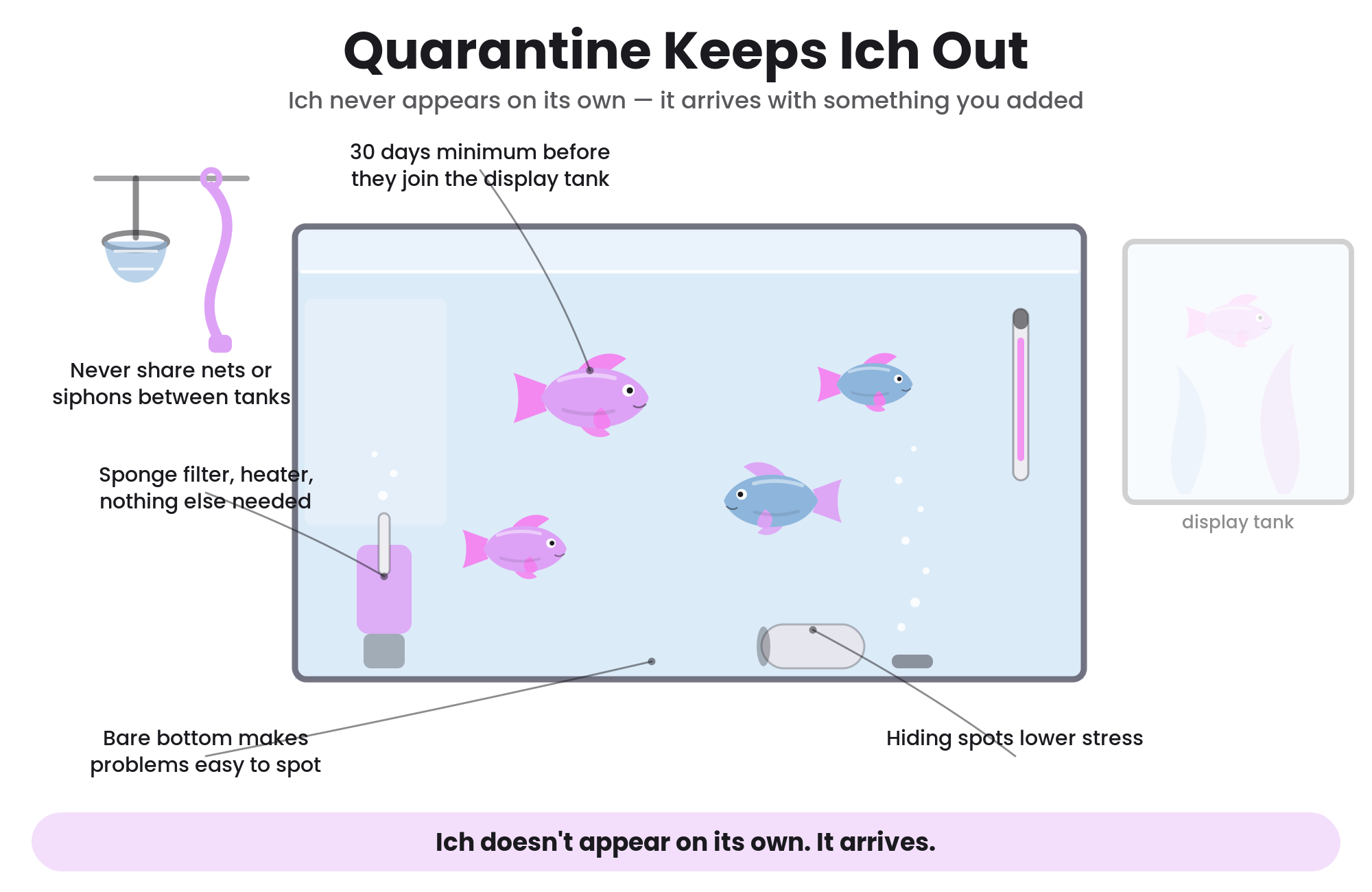
UF/IFAS recommends a minimum 30-day quarantine period for incoming fish, and the reasoning is specific to how ich behaves. Transport and handling stress causes asymptomatic carriers — fish showing no clinical signs at all — to break with active disease, typically one to three weeks after shipping at the warm temperatures most aquarium fish are kept at. A two-week quarantine can miss that window entirely.
If you are not already running one, our full guide to quarantining freshwater fish walks through the setup, timeline, and observation protocol. At Purple Aquatics we breed our livestock in-house rather than sourcing through overseas trans-shippers, which removes several links from the chain where contamination typically occurs — but quarantine remains best practice for any fish entering any system, from any source.
Dedicate equipment to each system
Tomont cysts are sticky by design, and they survive perfectly well on a damp net, siphon hose, bucket, algae scraper, or pair of hands. Sharing equipment between tanks is one of the most reliable ways to move ich around a fish room. UF/IFAS also notes that the parasite can spread by aerosolized water mist between adjacent open systems, which is worth knowing if you run a rack of tanks with air-driven filtration.
This applies with particular force to breeding projects, where fish and equipment move between grow-out tanks constantly. If you are running a livebearer project across multiple grow-out tanks, that traffic is unavoidable — colour-coding nets and siphons per tank costs almost nothing and eliminates the most common transmission route.
Quarantine plants, water, and decor as well as fish
Anything wet from another system is a plausible route of introduction. Store bag water, borrowed decor, and plants pulled from a friend's tank can all carry cysts. Because the parasite cannot complete its life cycle without a fish, holding plants and hardscape in a fishless container clears them — the theronts that hatch simply have nothing to infect. A week is ample at tropical temperatures, but the holding period has to cover a full life cycle at whatever temperature the container actually sits at, and cool water stretches that out considerably; UF/IFAS phrases it as holding them for the duration of the Ich life cycle at a given temperature. Never pour store bag water into your display tank.
Keep temperature stable and stocking reasonable
Outbreaks disproportionately follow temperature changes, particularly rising ones. A reliable heater, a thermometer you actually read, and water changes matched to tank temperature all reduce the trigger. Crowding matters independently: the denser the stocking, the easier it is for each hatching theront to find a host, and the faster a small problem compounds into a lethal one.
Frequently Asked Questions About Ich in Freshwater Fish
-
In a tank held at 75 to 79°F, a correctly run treatment typically clears an infection in about two weeks. The life cycle itself completes in three to six days at those temperatures, and UF/IFAS recommends a minimum of three to five daily chemical treatments. The critical point is that treatment should continue for at least three days after the last visible spot has dropped off — the interval the Ich-X label gives — because cysts on the substrate are still hatching. Many keepers run a full extra week as a margin, though no published figure supports a specific longer number. In cooler water the cycle stretches considerably, treatments are spaced three to five days apart, and the total course runs longer.
-
Sometimes, in a lightly stocked, well-filtered tank with otherwise healthy fish, an infection will resolve without intervention as fish mount an immune response and established filter microfauna consume free-swimming stages. This is not a reasonable plan. Ich is capable of causing 100% mortality, and the difference between the outcomes is often just the number of parasites present when the outbreak was noticed. UF/IFAS treats the presence of even a single confirmed parasite as grounds for immediate treatment.
-
This is genuinely debated. Heat unquestionably speeds up the life cycle, which shortens the outbreak and exposes the parasite’s vulnerable stage sooner. Whether heat alone kills the parasite is contested — older aquaculture literature holds that reproduction stops near 86°F and the organism dies at a sustained 89.5 to 90°F, while others argue heat does neither and that apparent cures reflect the shortened cycle rather than the temperature. Laboratory isolates have been cultured successfully at 86°F, which weighs against the first position. What is not debated is the risk: elevated temperature raises the fish’s oxygen demand while lowering the water’s oxygen content, and ich commonly damages gills. Treat heat as an adjunct to salt or medication, add aeration first, and never combine high temperatures with formalin.
-
Yes. All freshwater fish species are considered susceptible, and the parasite has a direct life cycle that requires no intermediate host. If one fish in a tank has ich, every fish in that tank has been exposed and the substrate is already carrying cysts. Treating a single visibly affected fish in isolation while leaving the rest of the system untreated is one of the most common reasons an outbreak recurs. Invertebrates such as shrimp and snails cannot be infected, but they can carry cysts on their shells if moved between tanks.
-
Not for long. Ich is an obligate parasite with no true dormant stage — the free-swimming infective cells generally have only about 24 to 48 hours at tropical temperatures to find a host before they die. A tank left fishless for a week or more at normal aquarium temperatures will clear itself, though cold water stretches that out because the encysted stage takes far longer to release. This is why holding plants, decor, and hardscape in a fishless container is a reliable way to decontaminate them, and it is also the biological reason the popular claim that ich is permanently present in every aquarium does not hold up.
-
Ich spots are crisp, very white, roughly the size of a grain of salt, and distributed evenly across the whole fish without forming patches. Epistylis is fuzzy and translucent rather than solid white, forms clumps or tufts, protrudes noticeably from the body, and frequently colonizes the eyes — which ich only rarely does. The distinction matters mostly because of heat: raising the temperature, as a standard ich protocol tells you to, accelerates the bacterial growth epistylis feeds on and makes it worse. Epistylis is an environmental problem driven by organic waste and wounds, and responds to cleaning, water changes, and antibacterial treatment. Because the two are so easily confused, a common approach is to dose a formalin and malachite green product in the water while feeding an antibiotic.
-
Treat the whole tank. By the time white spots are visible on any fish, mature parasites have already dropped off and encysted on your substrate, decor, and equipment, and infective cells are circulating in the water column. Removing the visibly affected fish to a hospital tank does not decontaminate the display. The only situation in which treating a separate tank makes sense is when you move the entire fish population out of a heavily planted or invertebrate-stocked display into a bare-bottom hospital tank, and then leave the display fishless long enough for the remaining parasites to die out.